



The following is excerpted from the free downloadable book How to Release God’s Healing Power Through Prayer by Greig, Virkler, Gaydos (pages 7-9). It builds a powerful case showing that the Hebrew concept of meditating involved envisioning. So let's not give envisioning over to the New Age movement. Godly imagination is defined as picturing things God says are true. Pictures are worth a thousand words. They are powerful. Let's fill the eyes of our hearts with godly imagination, dreams and visions (Acts 2:17; Eph. 1:17,18). The Word promises that those who do so will be prosperous, successful and blessed!
Thank you to Dr. Gary Greig who wrote this piece and is pictured below.
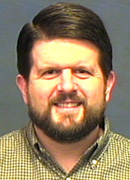 Joshua 1:8 and Psalm 1:2 command us to meditate on or imagine or picture what Scripture says. The Hebrew verb used in these passages is hagah, which means on the one hand “mutter, utter,” and on the other hand "meditate, muse [ponder, consider at length], imagine, devise [picture in the mind]".1 The specific Hebrew phrase used in Joshua 1:8 and Psalm 1:2 is hagah be, which elsewhere in the Hebrew Bible refers to thinking that involves visual thinking, imagination, or picturing. According to Professor L. Langsdorf of Southern Illinois University, “The observation that imaging accompanies thinking is hardly debatable.”2 Thinking and memory are made up of visual thinking and visual memory on the one hand, and verbal thinking and verbal memory on the other hand. “We may consider ‘visual thinking’ as that form of thought in which images are generated or recalled in the mind.”3
Dr. Ernst Jenni, Professor of Old Testament at the University of Basel, Switzerland, grouped with other Hebrew verbs of visual and mental perception occurrences of the Hebrew verb hagah with the connotation ‘meditate, ponder’: Looking, thinking: . . . here develops the mental contact with inner perception in a form requiring an enduring, lengthened time, to which the preposition be is well suited. . . . It centers around verbs of meditating, of which hagah . . . is constructed more frequently with the direct object.4
Spanish Old Testament scholar, Dr. Jesus Arambarri, did a careful syntactic and semantic study of the Hebrew verb hagah and the phrase hagah be which is used in Joshua 1:8 and Psalm 1:2.5 He concluded that when the verb is used of the heart to denote meditating, it denotes “more than just speaking.”6 Along with the parallel Hebrew verb zakhar “remember” in Psalms 63:7, 77:13, and 143:5, Hebrew hagah be refers to a type of reflection that envisions or pictures God’s deeds (“the envisioning [vergegenwärtigend] memory of Yahweh’s acts of salvation”).7 He adds that Hebrew hagah be “has to do with a joyful and willing preoccupation with the past, which, in the course of remembering, has come to be in the present. . . . ‘Reflect, meditate’ are common translations. . . . Hagah be comprises a thinking, a repeating, a putting of oneself in the original mind-set.”8 When one envisions or pictures what the Scriptures describe and one puts oneself in the original mind-set of those who witnessed the saving acts of God, “the past of salvation history becomes the present in the outlook of the person, who remembers the deeds of the Lord, [and] who carries the Torah in his heart.”9 Concerning Joshua 1:8, Arambarri concludes, “The envisioning of the deeds of God—this occurs in Jos. 1:8 with the continuous keeping-in-the-mouth of the written words, which are found in the Book of the Law.”10
As the work of these scholars has suggested, the internal, mental connotation of Hebrew hagah refers to meditating, thinking, and pondering that clearly includes visual thinking and visual memory in several passages. Prov. 24:2 says of the wicked that “their heart devises (or ‘plans’ or ‘imagines’ Heb. hagah) violence.” This passage clearly portrays the wicked plotting ways--which obviously includes visual planning--to attack their enemies. Isa. 33:18 describes the heart of God’s people remembering their former oppressors: “Your heart shall meditate on (or “imagine” or “(visually+verbally) ponder” hagah) (the former) terror: ‘Where is the scribe?’ ‘Where is the receiver?’ ‘Where is he who counted the towers?’ (Isa. 33:18)” In this passage Heb. hagah clearly refers to, as Dr. J. N. Oswalt points out, mentally “looking back”11 at the past forms and agents of oppression. A Judean, who witnessed the oppression of the Assyrian occupation of the northern kingdom and the Assyrian military campaigns against the southern cities of Judah, could hardly “look back” and remember past Assyrian officials, like the passage describes, without some form of visual memories or mental pictures coming to his mind of the Assyrian “scribe,” the Assyrian “receiver,” and “he who counted the towers.”
As Dr. Arambarri concluded, the specific Hebrew phrase ‘hagah be,’ “meditate on,” that is used in Joshua 1:8 and Psalm 1:2, in other Old Testament passages clearly refers to pondering, meditating, or reflecting that involves not only verbal thought but also visual thought and mental envisioning of the deeds of the Lord. Psalm 77:12 “I will ponder (or ‘imagine’ hagah) all your work and consider (Heb. siakh) your deeds.” Dr. Eugene Peterson’s translation of Ps. 77:12 rightly emphasizes the visual thought and mental picturing of God’s past acts referred to by the Hebrew verbs in the passage: “I’ll ponder all the things you’ve accomplished, and give a long loving look at your acts” (Ps. 77:12).12 Clearly the Psalmist is saying that in meditating on or reflecting upon God’s works, he will go inside his mind and there picture or visually think about (as well as verbally think about) the wondrous works of God in the history of God’s people—God’s leading Abraham to Canaan, God’s calling Moses, God’s freeing the Israelites from Egypt and leading them through the Red Sea, God’s manifesting His Presence in a cloud of Fire and Glory on Mt. Sinai. In Psalm 143:5 the Hebrew phrase hagah be, “meditate on” or “imagine” or “ponder,” is used the same way that the phrase is used in Psalm 77:12 of remembering the past redemptive deeds of the Lord for His people: Psalm 143:5 “I remember the days of old; I ponder (or ‘imagine’ hagah) all your deeds; I consider the work of your hands.” In Psalm 63:6 the Hebrew phrase hagah be, “meditate on” or “imagine” or “ponder,” is used of visually thinking about the Lord, as suggested by the context, Ps. 63:3, which uses the Hebrew verb khazah “to see, have a vision,” a verb used of seeing prophetic visions or seeing in the spiritual realm.13 In Psalm 63:3 the Hebrew verb khazah is used to refer to seeing the presence of the Lord in the temple: Ps. 63:3 “I have seen (khazah) you in the sanctuary and beheld your power and your glory.” Psalm 63:6 “When I remember you on my bed, I meditate on (or ‘imagine’ or ‘(visually+verbally) ponder’ hagah be) you in the night watches.” This theme of seeing and visually thinking about the Lord corresponds to passages where David in the Psalms visually looks to the Lord or visually sets the Lord before himself: Ps. 16:8 “I set14 the LORD always before me.” Psalm 16:8 is translated in the third century B.C. Greek Septuagint and then quoted by Peter in Acts 2:25 with a visual interpretation: Acts 2:25, quoting Psalm 16:8, translating the Greek literally: "I was seeing (pro’oromen imperfect middle indicative) the Lord always before me"); Ps. 17:15 “And I--in righteousness—I will see your face; when I awake, I will be satisfied with seeing your likeness”; Ps. 25:15 “My eyes are ever on the LORD, for only he will release my feet from the snare.” Ps. 105:4 “Look to the LORD and his strength; seek his face always”; Ps. 141:8 “But my eyes are fixed on you, O Sovereign LORD; in you I take refuge.”
Therefore, clearly the same Hebrew phrase hagah be, that is used in Psalms 63:6, 77:12 and 143:5 with the meaning “meditate on” or “(visually+verbally) imagine” or “(visually+verbally) ponder,” refers to picturing and thinking about something in one’s mind. And, as Dr. Arambarri showed in his study, this is the meaning that the same Hebrew phrase, hagah be, must have in Joshua 1:8 and Psalm 1:2: Josh. 1:8 “Do not let this Book of the Law depart from your mouth, but you shall meditate on it (or “(visually+verbally) imagine it” or “(visually+verbally) ponder it”) day and night, so that you may be careful to do everything written in it. Then you will be prosperous and successful.” Ps. 1:2-3 “But his delight is in the law of the Lord, and on his law he meditates (or “(visually+verbally) imagines” or “(visually+verbally) ponders”) day and night. He is like a tree planted by streams of water, which yields its fruit in season and whose leaf does not wither. Whatever he does prospers.” The visual nature of the thought involved in meditating, which is denoted by Hebrew hagah be in Joshua 1:8 and Psalm 1:2, is confirmed by the thematically parallel New Testament passage, James 1:25. The latter passage makes a clear allusion to the themes Joshua 1:8 and Psalm 1:2ff that those who meditate on God’s Word to do what it says would prosper:15 The OT concept of meditating on God’s law is expressed in James 1:25 as visually looking into God’s law with “penetrating absorption.”16 The Greek participle parakupsas in James 1:25 denotes “one who bends over” or “one who looks into”17: James 1:25 “But the one who looks intently into (Grk. parakupsas) the perfect law that gives freedom, and continues to do this, not forgetting what he has heard, but doing it--he will be blessed in what he does.”
1 F. Brown, S. R. Driver, and C. A. Briggs, A Hebrew and English Lexicon of the Old Testament (Oxford: The Clarendon Press, 1951), p. 211.
2 L. Langsdorf, Argumentation & Advocacy 33 (1996), p. 46.
3 T. G. West, In the Mind's Eye (New York: Prometheus books, 1997), p. 21.
4 “Betrachten, denken: . . . hier [verläuft] der geistige Kontakt bei der inneren Wahrnehmung in einer andauernden, längere Zeit beanspruchenden Form, wozu die Präposition be gut passt, . . . . Es geht um die Verben des Meditierens, von denen hagah häufiger mit direktem Objekt . . . konstruiert ist.” E. Jenni, Die Hebräischen Präpositionen I. Die Präposition Beth (Stuttgart, Germany: W. Kohlhammer, 1992), p. 253.
5 J. Arambarri in A. A. Diesel et al., eds., Jedes Ding Hat Seine Zeit: Studien zur Israelitischen und Altorientalischen Weisheit [Festschrift D. Michel] (BZAW 241, Berlin: Walter de Gruyter, 1996), pp. 1-17.
6 “As an activity of the heart (Prov. 24:2), it is more than just talking or speaking” (“Als Tätigkeit des Herzens (Prov. 24,2) ist es mehr als ein Reden oder Sprechen.” Arambarri, in A. A. Diesel, Jedes Ding Hat Seine Zeit, p. 10).
7 “Das vergegenwärtigende Gedenken an Jahwes Heilshandeln.” Arambarri, in A. A. Diesel, Jedes Ding Hat Seine Zeit, p. 12.
8 “Es handelt sich um eine freudige und willige Beschäftigung mit einer Vergangenheit, die im Laufe des Gedenkens zur Gegenwart geworden ist. . . . “Nachsinnen, meditieren’ sind geläufige Übersetzungen. . . . Hagah be beinhaltet ein Denken, ein Wiederholen, ein Sich-auf-die-entstehende-Stimmung-Einlassen.” Arambarri, in A. A. Diesel, Jedes Ding Hat Seine Zeit, p. 14.
9 “Die Vergangenheit der Heilsgeschichte wird Gegenwart in der Haltung des Menschen, der sich an die Taten des Herrn erinnert, der die Torah im Herzen trägt.” Arambarri, in A. A. Diesel, Jedes Ding Hat Seine Zeit, p. 16.
10 “Die Vergegenwärtigung der Taten Gottes, das geschieht in Jos 1,8 mit dem ständigen Im-Mund-Behalten der geschriebenen Worte, die im Buch des Gesetzes zu finden sind.” Arambarri, in A. A. Diesel, Jedes Ding Hat Seine Zeit, pp. 14-15.
11 J. N. Oswalt, Isaiah 1-39 (Grand Rapids, MI: Eerdmans, 1986), p. 603.
12 E. Peterson, The Message (Colorado Springs, CO: NavPress, 2002-2003) sub Ps. 77:12.
13 Brown, Driver, and Briggs, A Hebrew and English Lexicon of the Old Testament, p. 302.
14 Concerning translating shiviti “I set” rather than “I have set,” the Hebrew perfect in poetry denotes, I believe, not past tense but perfective aspect, describing the action as a single event with durative, habitual meaning—see Waltke and O’Connor, An Introduction to Biblical Hebrew Syntax (Winona Lake, IN: Eisenbrauns, 1990), p. 475, and notes 91-92.
15 F. Hauck, in Kittel, Theological Dictionary of the New Testament (Grand Rapids, MI: Eerdmans, 1967), vol. iv, p. 578, n.4, connects James 1:25 thematically with Psalm 1:2.
16 W. Michaelis, in Kittel, Theological Dictionary of the New Testament, vol. 5, p. 815.
17 Bauer, Arndt, Gingrich, and Danker, A Greek-English Lexicon of the New Testament and Other Early Christian Literature (Chicago: University of Chicago Press, 1979), p. 619.
Related Blogs:
Word of Faith


Comments
Thank you Dr Mark for
by Anonymous
Thank you Dr Mark for encouraging and challenging words. It is so uplifting, inspiring and eye opening.
Add new comment